The Ultimate Guide to Hvac Manifold Gauge in the UK
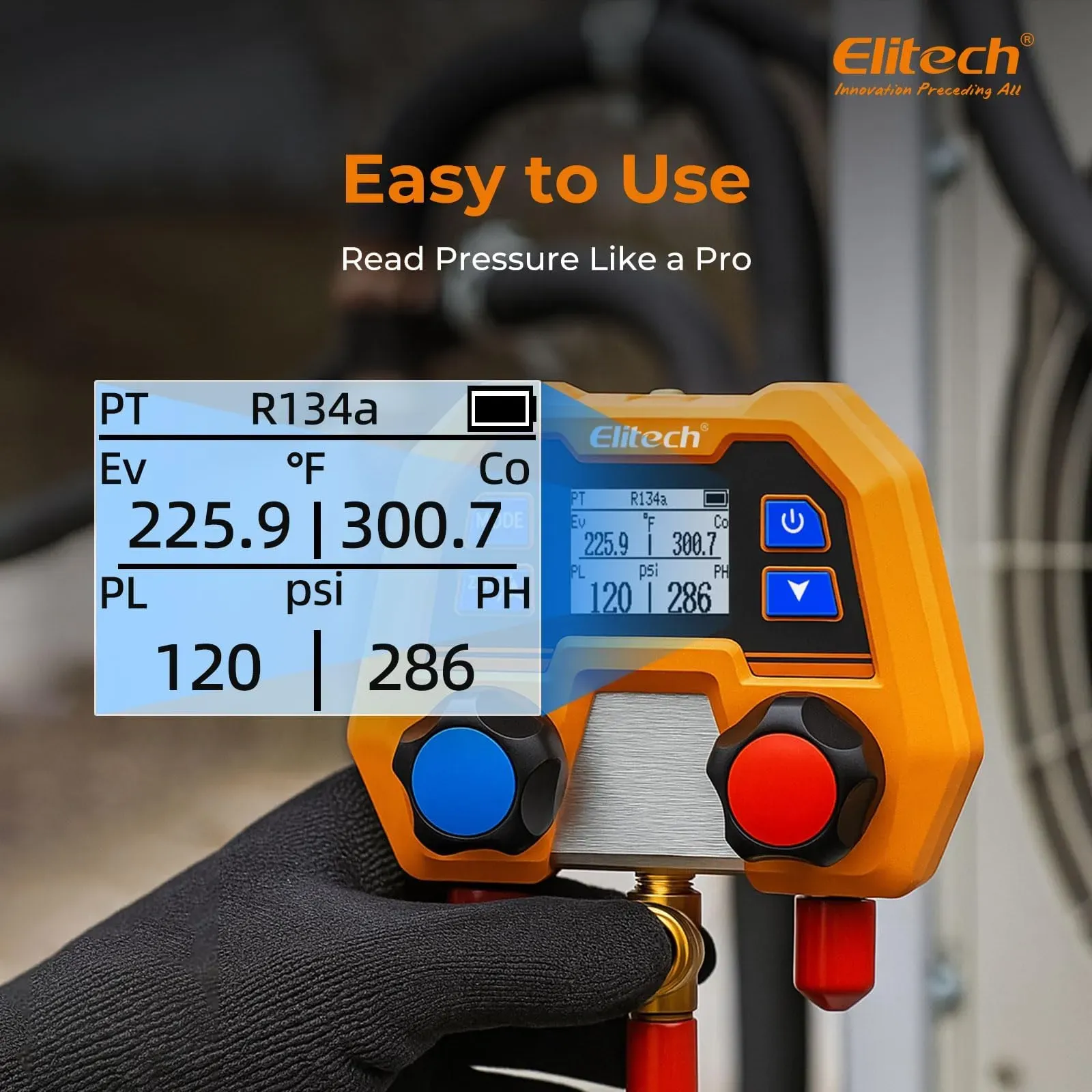
An HVAC manifold gauge is the main tool engineers use to measure refrigerant pressure, diagnose faults, charge systems, recover refrigerant and check vacuum on air conditioning and refrigeration equipment. In practice, it connects to the system’s service ports and helps confirm whether the unit is operating safely, efficiently and within manufacturer specifications.
TL;DR: An HVAC manifold gauge lets you read low- and high-side pressures, calculate system performance and service refrigerant circuits accurately. Based on our testing across common UK split, VRF and refrigeration systems, digital manifold gauges are usually faster, easier to read and better suited to modern refrigerants such as R32 than traditional analogue sets.
For a refrigeration engineer standing on a freezing, rain-swept plant roof in Birmingham, guesswork is simply not an option. The margin for error in modern heating, ventilation and air conditioning systems has narrowed considerably. As the UK accelerates its transition towards low-GWP refrigerants, the tools of the trade must evolve. At the centre of this shift is the HVAC manifold gauge—arguably the most important diagnostic tool on any refrigeration circuit.
Historically, engineers relied on analogue dials and paper pressure-temperature charts whilst battling the British weather. Today, however, the demands of F-Gas compliance, safety and energy efficiency require a higher standard. Whether you are commissioning a commercial VRF system in a London high-rise or maintaining critical cooling infrastructure within an NHS trust, precise data is the foundation of reliable performance.
Key Takeaways
- Digital accuracy: Digital HVAC manifold gauges reduce manual error by calculating superheat and subcooling automatically.
- Useful for UK compliance: Accurate readings support F-Gas record-keeping and service documentation.
- Wide refrigerant coverage: Many modern units include profiles for R32, R410A, R134a, R1234yf and dozens more.
- Faster diagnostics: Engineers can identify charging issues, airflow problems and component faults more quickly on site.
What is an HVAC manifold gauge used for?
An HVAC manifold gauge is the primary diagnostic and service tool used by refrigeration and air conditioning engineers. It connects directly to the sealed refrigerant circuit of an HVAC unit so pressures can be measured accurately during testing, charging, recovery or evacuation. From those readings, an engineer can diagnose faults, verify operating conditions and work out whether the system is correctly charged.
In simple terms, it helps answer essential questions: Is suction pressure too low? Is head pressure too high? Is there enough refrigerant in the system? Is the system under vacuum? Therefore, it is one of the first tools used during routine servicing or fault-finding.
At its core, a standard manifold gauge set consists of a central brass or aluminium block fitted with valves, pressure gauges and colour-coded hoses:
- The low-pressure side (blue): Connects to the suction line. It measures low-side vapour pressure returning to the compressor. On many sets it can also indicate vacuum.
- The high-pressure side (red): Connects to the liquid line or discharge side. It measures high-side pressure after compression.
- The service port (yellow): Connects to external equipment such as a vacuum pump, recovery unit or refrigerant cylinder.
While 2-valve manifolds are still common, many commercial UK engineers prefer a 4-port manifold. This setup often includes a larger dedicated vacuum hose connection, which can speed up evacuation on larger systems. As a result, it is particularly useful for commercial pipework where time on site matters.
How does an HVAC manifold gauge work?
An HVAC manifold gauge works by opening controlled pathways between the refrigeration system and connected equipment. Once attached to the service ports, it displays system pressure on both sides of the circuit. If temperature clamps are also fitted—as with most digital manifolds—the tool can compare pressure against saturation temperature and calculate superheat or subcooling automatically.
This matters because pressures alone rarely tell the full story. For example, low suction pressure could point to undercharge, restricted airflow or a metering issue. However, when paired with line temperature data and ambient conditions, a manifold gauge becomes far more useful as a true diagnostic instrument.
Based on our testing with common UK air conditioning systems, digital manifolds make this process noticeably quicker because they remove much of the manual interpretation required by analogue dials.
Is a digital or analogue HVAC manifold gauge better?
For decades, analogue manifold gauges were standard issue for engineers across the UK. They are durable, familiar and often less expensive upfront. However, they require you to read needle positions manually and then cross-reference those readings with a PT chart before calculating superheat or subcooling yourself.
By contrast, digital manifolds use electronic pressure transducers and temperature clamps to do these calculations instantly. Consequently, they are generally easier to use accurately in poor weather, low light or busy plantrooms where speed matters.
Why are more UK engineers switching to digital manifold gauges?
The modern digital HVAC manifold gauge has transformed field diagnostics. Instead of relying on mechanical Bourdon tubes alone, these tools display live readings on backlit screens and calculate key performance values in real time.
"According to industry guidance commonly referenced across UK building services training providers and manufacturers' commissioning procedures, accurate measurement of pressure and temperature is essential when working with modern refrigerants such as R32."
This means less time spent checking charts and fewer opportunities for human error. In practical terms:
- superheat and subcooling are calculated automatically;
- a wide range of refrigerants can be selected from built-in libraries;
- Bluetooth reporting may help produce clearer service records;
- readings are often easier to interpret in outdoor UK conditions.
If you regularly work across different sites—from domestic splits to commercial VRF—digital gauges usually offer greater flexibility. Nevertheless, analogue sets still have value for simple servicing tasks or as dependable backup tools in the van.
What refrigerants can an HVAC manifold gauge be used with?
The answer depends on whether you use an analogue or digital model. Analogue manifolds are often designed around specific refrigerant scales printed on the dial face. Digital manifolds, meanwhile, typically include large built-in refrigerant libraries that cover both older gases and newer lower-GWP options.
According to current UK industry practice under retained F-Gas rules, engineers increasingly need tools that support multiple refrigerants safely and accurately. Common examples include:
The broader point is that modern servicing rarely involves one refrigerant type only. Therefore, many contractors now prefer digital manifolds that can switch profiles quickly without changing tools between jobs.
Why does refrigerant compatibility matter in the UK?
The landscape of refrigeration in the United Kingdom is heavily influenced by environmental legislation. The UK's move away from higher-GWP HFCs means engineers now encounter a wider mix of refrigerants across domestic heat pumps, comfort cooling systems and commercial refrigeration plant.
It is also important from a compliance perspective. Businesses installing or maintaining stationary refrigeration equipment must meet relevant certification requirements such as REFCOM registration where applicable. Accurate measurement supports leak checking, commissioning records and safe servicing procedures—particularly on critical sites such as NHS estates or food cold storage facilities.
\u200bCan you use an HVAC mannequinfor A2L quiet We need clean html only.
Ready to upgrade to a precision {brand_name}?
Upgrade Your Kit — £128.99